Africa faces some of the world’s most urgent environmental challenges. Climate change threatens agriculture, water security and livelihoods across the continent. The response is not coming only from governments. A new generation of climate entrepreneurs is building ventures that address these challenges while creating jobs and driving economic growth.
The Youth Ecopreneur Programme received applications from more than 1,500 young founders across over 120 countries, all with ideas for a more sustainable future. Among them were young innovators transforming sectors across regions and industries, from agriculture to wildfire detection.
These entrepreneurs are proving that sustainability and profit can go hand in hand.
Climate Innovation Across Africa
African climate entrepreneurs are addressing environmental challenges with creativity and ambition. Their work spans multiple sectors.
In Nigeria, Ikenna Nzewi founded Releaf Marketplace, which uses patented processing technology to boost smallholder productivity while generating biochar, a stable form of carbon removal produced from agricultural byproducts. By linking value-chain efficiency with carbon sequestration, Releaf is shaping a new model for climate-smart industrialisation.
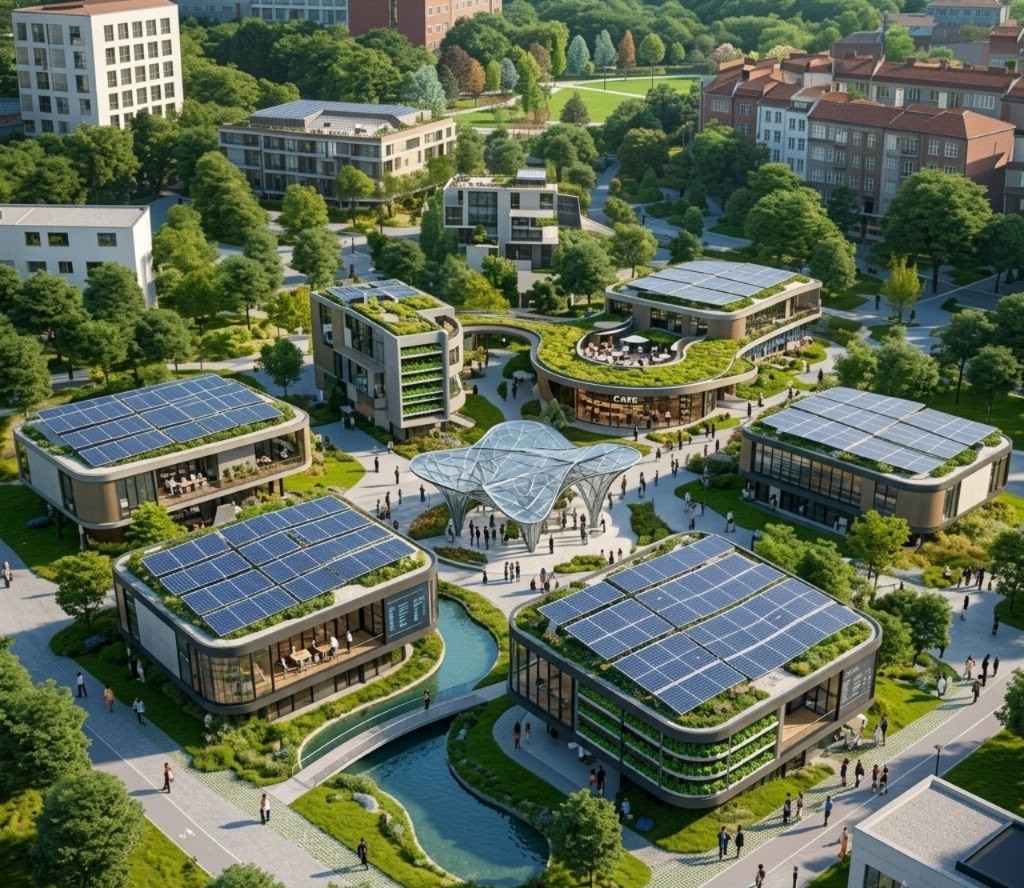
In Malawi, W. Leif Van Grinsven is developing integrated, climate-resilient communities by combining sustainable housing, agriculture, agroforestry, environmental restoration, solar energy and digital connectivity. His model demonstrates that holistic, community-led development is both scalable and sustainable.
In Barbados, Joshua Forte transforms invasive Sargassum seaweed and other organic materials into nutrient-rich biostimulants, offering environmentally friendly alternatives to synthetic agricultural inputs while restoring soil health.
The Motivation Behind Climate Entrepreneurship
Research on climate entrepreneurship in Nigeria and Ghana reveals what motivates these founders. Climate entrepreneurs are driven by passion, opportunity, technology, empowerment, training and education.
These founders face significant challenges. The research identifies financial constraints, environmental factors and weak policy formulation and implementation as major obstacles.
By proposing the POTENT-FEW-Policy Model, the study provides directions for enhancing the involvement of entrepreneurs in climate change mitigation and adaptation in Africa.
The Business Case for Climate Entrepreneurship
Climate entrepreneurship is not just good for the planet. It is good business. The demand for sustainable products and services is growing. Investors are increasingly directing capital toward green ventures. Governments are creating incentives for climate-friendly businesses.
Entrepreneurs who enter this space now are positioning themselves for long-term growth. They are building ventures that align with global trends, attract customers who care about sustainability and create value that extends beyond profit.
The Role of Technology in Climate Ventures
Technology is a crucial enabler of climate entrepreneurship. From AI-powered wildfire detection to solar-powered water systems, technology allows entrepreneurs to address environmental challenges at scale.
In Argentina, Camila Saa helped develop a system that detects wildfires faster than widely used global platforms. Their technology is now helping responders protect communities and ecosystems across Latin America and Asia.
In Egypt, Mohamed Khaled’s LifeBox, a solar-powered mobile unit, delivers decentralised clean energy and safe water to remote and underserved communities across Africa and the Middle East, offering a practical pathway to improved climate resilience.
What This Means for Aspiring Entrepreneurs
The message for aspiring entrepreneurs is clear. Climate entrepreneurship is not just for environmentalists. It is for anyone who sees an opportunity to solve a problem and build a sustainable business.
Climate entrepreneurs are proving that you can make a difference and build a business. They are creating jobs, generating income and contributing to the transition to a green economy.
The next generation of entrepreneurs will be defined by their ability to address the challenges of climate change. They will build businesses that solve environmental problems, create economic value and leave a positive legacy for future generations.