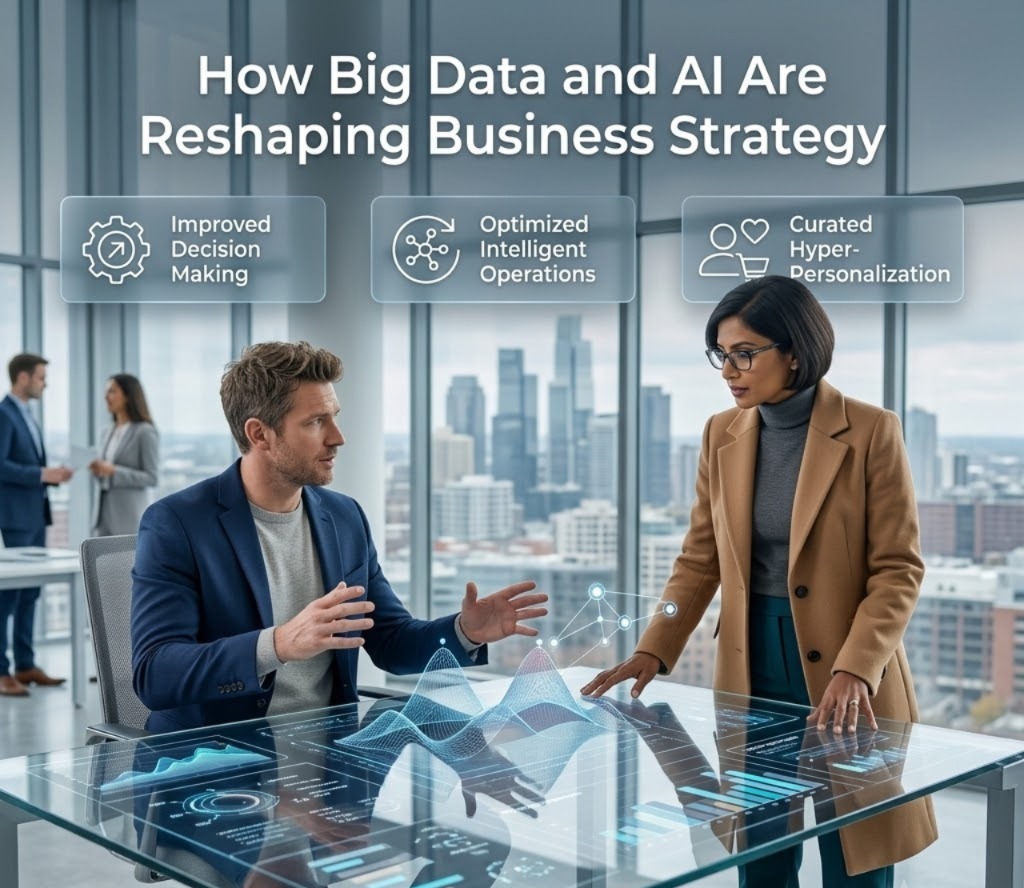
Once intuitive, business decisions are now being replaced by precise and adaptive data-based analytics. The rapid advancement of digital technologies, including Big Data, Artificial Intelligence and the Internet of Things, has revolutionised the way businesses operate, from production processes to marketing strategies and consumer interactions.
In the context of entrepreneurship, Big Data has brought significant changes in the way businesses are run. By analysing large and diverse consumer data, companies can identify new market patterns and opportunities that may have previously gone undetected.
The entrepreneurs who master data are the ones who will lead the next wave of business transformation.
What Data-Driven Entrepreneurship Means
Data-driven entrepreneurship means using data to inform every aspect of business operations. It means making decisions based on evidence rather than intuition. It means understanding customers at a granular level and delivering personalised experiences that build loyalty.
The Big Data Explosion phenomenon has created a new landscape where data has become a key strategic asset for business actors. The combination of Big Data and AI not only accelerates business processes but also enables micro-personalisation in marketing.
The Role of AI in Business Strategy
Artificial Intelligence has become a catalyst in the automation process and intelligent decision-making. In entrepreneurship, AI is used not only for efficiency but also to open up new market opportunities through trend prediction, consumer behaviour segmentation and personalisation.
AI plays a central role in marketing strategies that encompass forecasting, personalisation and content automation. It expands the reach of entrepreneurs by reducing barriers to access to data and business intelligence.
The Internet of Things and Real-Time Data
The Internet of Things enables companies to collect real-time data from physical devices. This technology enables predictive service innovation and continuous monitoring.
Integrating IoT with AI yields responsive business models, such as sensor-based services, smart retail and predictive maintenance, which further enhances the competitiveness of small and medium-sized businesses.
Marketing Automation and Personalisation
Marketing automation enables businesses to target customers with relevant messages automatically and efficiently. This includes AI-based email marketing, automated segmentation and omnichannel campaigns.
The concept of micro-personalisation, which involves delivering user experiences tailored to an individual’s unique preferences in as much detail as possible, is a cornerstone of marketing strategies and service innovation. Integrating AI with customer data enables hyper-personalisation capabilities, resulting in increased customer loyalty and customer lifetime value.
From Ownership to Experience
Consumers now prefer experiences over ownership, reflected in the trend of subscriptions, rentals or platform-based services. This model changes the business logic from selling products to providing holistic solutions and experiences.
The shift from ownership to experience is a direct consequence of digitalisation, which facilitates access and use without requiring ownership. This provides an opportunity for entrepreneurs to adopt service-based models.
The Rise of New Business Models
The combination of these factors has triggered the emergence of new business models that redefine the way businesses create, deliver and capture value. These include digital platforms, data-driven ecosystems and Data as a Service models.
The integration of AI and IoT yields predictive and value-based business models with contextual relevance. Companies are not only selling products but also selling intelligence, insights and service experiences that are continuously updated.
What This Means for Entrepreneurs
The message is clear. Data-driven entrepreneurship is not just for tech companies. It is for any entrepreneur who wants to compete in the digital economy.
Start by understanding the data your business generates. Look for patterns. Use those patterns to improve your products, personalise your marketing and make better decisions.
The entrepreneurs who succeed in the coming decade will be those who embrace data, leverage AI and build businesses that are ready for the future. The technology is available. The opportunity is now.