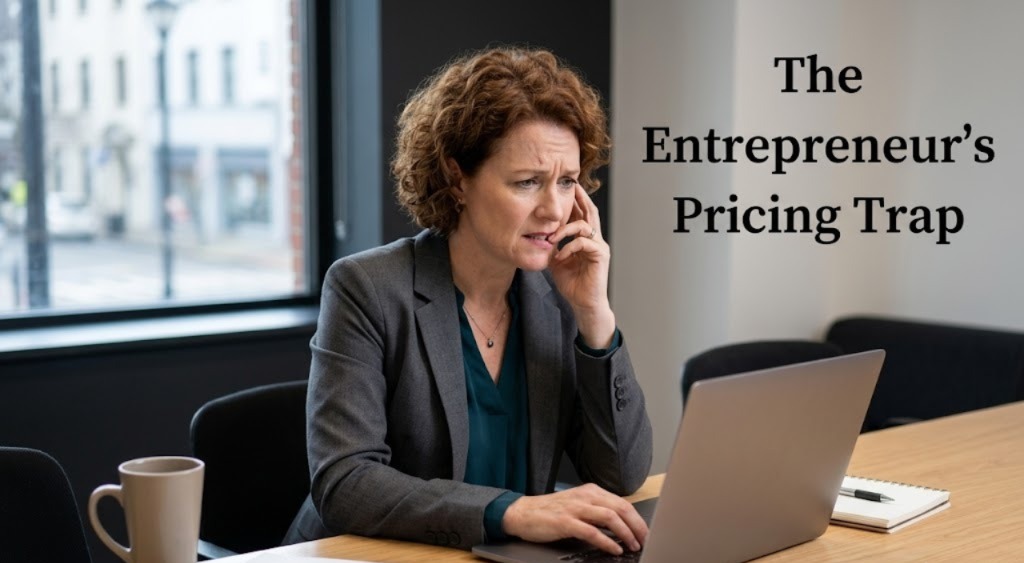
You have launched your product. You are confident it solves a real problem. But when you look at your bank account, the numbers do not add up. So you lower your price. More customers come, but they complain. They demand discounts. They leave the moment they find something cheaper.
This is the pricing trap. It is one of the most common and most damaging mistakes new entrepreneurs make. They believe that low prices will attract customers. In reality, low prices attract the wrong customers, signal low quality and leave money on the table that could fuel growth.
Why Entrepreneurs Underprice
The fear of rejection drives many founders to set prices too low. They imagine a customer saying, “That is too expensive”, and walking away. To avoid that moment, they set a price that feels safe.
Another reason is a lack of confidence. When you are not certain your product delivers value, you hesitate to ask for fair compensation. You worry that customers will not see the value you see.
Finally, many entrepreneurs blindly copy competitors. They see what others charge and match it, assuming that the market price is correct. But competitors may be underpricing too, or they may have different cost structures.
The Hidden Costs of Low Pricing
Low prices do not just reduce your revenue. They create deeper problems.
Profit erosion. This is the obvious cost. When you charge less, you earn less. That means less money for marketing, product improvement and your own salary. You stay small because you cannot afford to grow.
Wrong customer profile. Price‑sensitive customers are often the most demanding and the least loyal. They shop on price alone and will leave the moment a cheaper option appears. Serving them consumes your time and energy without building a stable customer base.
Perceived low quality. Customers use price as a signal of quality. A suspiciously low price makes them wonder what is wrong. They may assume your product is inferior, your service is poor, or your business will not last. High‑value customers avoid low‑price offerings.
Burnout. When you underprice, you must work harder to earn the same revenue. You take on more clients, work longer hours and still struggle to pay bills. Burnout follows, and your business suffers.
The Value‑Based Pricing Framework
The alternative is value‑based pricing: setting your price according to the value your customer receives, not the cost of your inputs.
Start by identifying the problem you solve. How much does that problem cost your customer in time, money or frustration? If you save a business ten hours a week and their time is worth ₦10,000 per hour, you have created ₦100,000 of weekly value. Charging ₦20,000 per week is still a bargain.
Next, segment your customers. Different customers receive different values. A large enterprise that uses your software to manage hundreds of employees gets more value than a solo entrepreneur. You can charge different prices to different segments.
Finally, test your price. Increase it by a small amount and watch what happens. If sales do not drop, your price was too low. Keep raising until you see a small decline. That is your optimal point.
How to Communicate Higher Prices
When you raise your price, you must justify it. Do not apologise. Do not offer discounts.
Explain the value. “Our service saves you ten hours a week. That is worth ₦100,000. We charge only ₦20,000.” This makes your price seem reasonable.
Provide proof. Testimonials, case studies and data about results build confidence. When customers see that others have succeeded with your product, they are more willing to pay.
Stand firm. Some customers will ask for discounts. Have a standard response: “Our price reflects the value we deliver. We do not offer discounts.” Most will accept it. Those who walk away were never going to be profitable customers.
When Low Pricing Makes Sense
There are situations where low pricing is strategic. You may offer a loss‑leader to attract customers who will later buy higher‑margin products. You may temporarily lower prices to enter a new market or to clear inventory.
But these are deliberate strategies, not desperate reactions. You decide when and why to lower prices. You do not drop your price because a customer asks.
Moving from Cost‑Plus to Value‑Based
Many entrepreneurs start with cost‑plus pricing: calculate your costs and add a margin. This is safe but leaves value on the table. Customers do not care about your costs. They care about the value they receive.
Transition gradually. Keep your current price for existing customers and offer a higher price to new ones. Test a premium version with extra features. Raise your price slowly over time.
The entrepreneurs who build sustainable businesses are not those who charge the least. They are those who communicate value clearly, serve the right customers and earn enough to invest in excellence.
Your price is not just a number. It is a statement about your brand, your confidence and your respect for your own work. Price it accordingly.